SaaS SEO
How I Do SaaS SEO Keyword Research in 2026?
Kamaraj Mathiarasan
|
Last updated on 10 February, 2026

SaaS SEO
Kamaraj Mathiarasan
|
Last updated on 10 February, 2026
If you asked me how I do keyword research, the exact steps we follow at PipeRocket Digital, this blog will be your answer. We’ve had long discussions about this within our team, and the reality is that most people start with tools when they should be starting with people.We treat SaaS SEO keyword research not just as a standard SaaS SEO checklist, but as a way to map the entire Total Addressable Market (TAM) for a product.Whether you are a founder trying to get traction or a marketer trying to scale, I am going to walk you through the exact process we use, a process that evolved directly from managing massive accounts like Sprinto.I will be upfront with you: it is a bit more work upfront. It takes time. But that extra effort is the difference between guessing what might work and actually dominating your category.
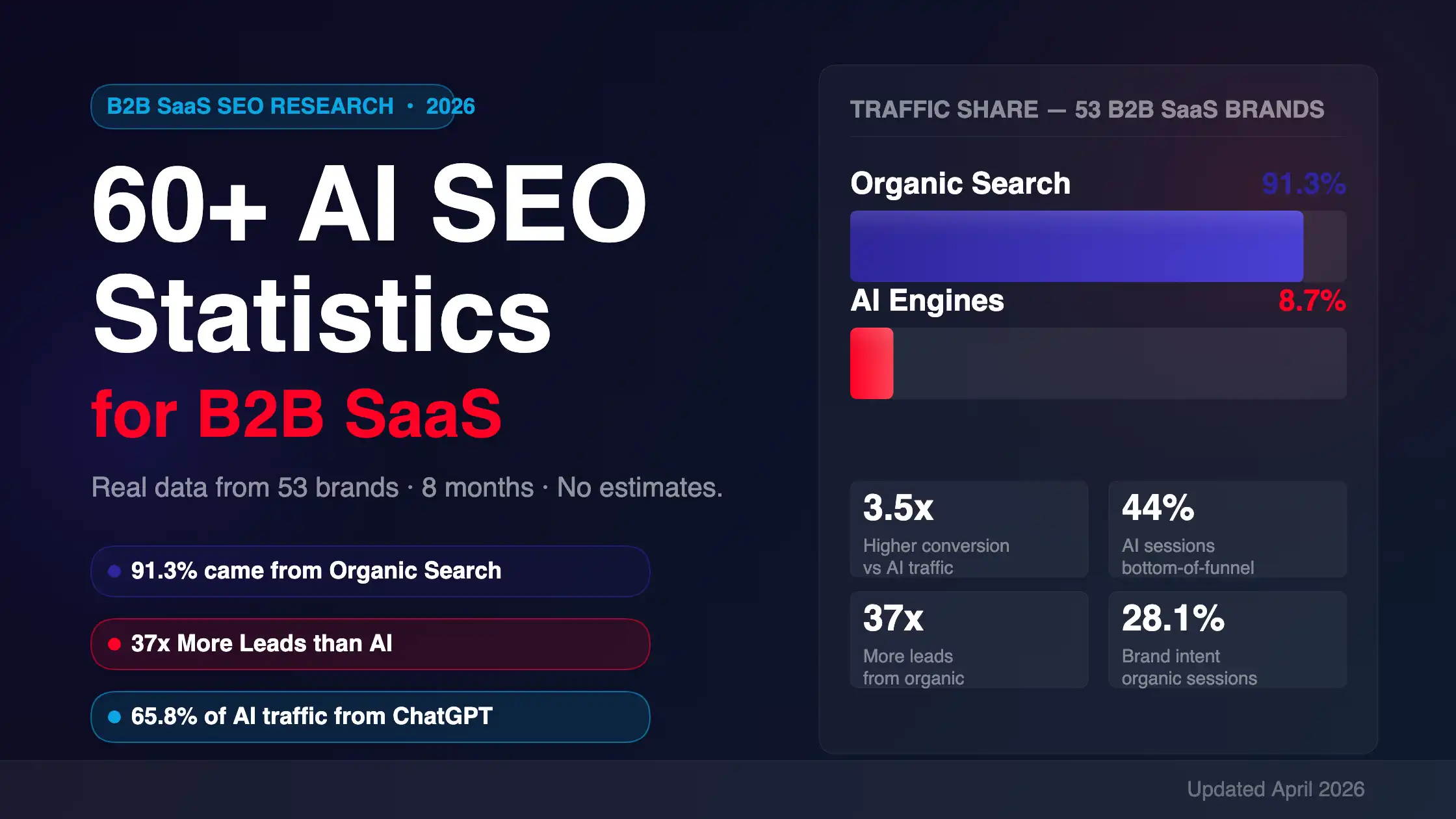
Before we even think about opening a spreadsheet, we have to talk about the shift that is happening right now. I know you are probably hearing the noise.People are saying “keywords are dead” and claiming that everything is moving toward AI tools like ChatGPT or Perplexity. And there is truth to that. It is true that the term “keyword” is slowly evolving into “prompt”. The way people interact with the internet is changing.However, I have a strong belief that traditional search isn’t ending anytime soon. Look at the behavior right now. Around 90% of people are still using Google to find their information. That is a massive chunk of the world.So, while we are absolutely preparing for a future of AI prompts, we’ll stick to the foundation: Keyword Research for SaaS SEO. It is still the bedrock of how your customers find you.
If I asked you to sit down and do keyword research for SaaS SEO right now, you would probably follow the standard playbook we all learned. You know the one. It usually looks something like this:
I get it. We used to do it exactly this way, too. But we realized something critical: this format does not help you scale. Think about what is happening here. When you start with just your own knowledge and a software tool, you are creating a very narrow view of the market.You are missing the full spectrum, the Total Addressable Market (TAM). You are only finding the keywords you expect to find. You are validating your own bias. To fix this, we had to flip the script entirely.
The biggest breakthrough I had was realizing that our internal teams held the keys to proper keyword research for SaaS SEO. This approach really clicked for me in 2023 when I was working with Sprinto.
Instead of jumping straight into Ahrefs or Semrush like I usually did, I created a simple Excel sheet. I sent this sheet to every single team that touches the product or interacts with the customer:
Honestly, when I first sent these sheets out, I was skeptical. I thought, “They’re just going to send me the same keywords I already know, the stuff competitors like Vanta or Drata are already ranking for”.I was very wrong and it was a huge surprise. You see, real users don’t search like SaaS SEO pros.
That collaboration gave us an extra 900+ keywords we hadn’t found on our own. It took our list from a standard 1,500 keywords to a massive 2,400.We never would have found those simply by staring at a keyword tool. So here is your actionable step: Before you touch a tool, collaborate with your:
to curate a “human” list first.
Once you have that exhaustive list from your team, and only then, do you bring in the tools to validate the data. We use a specific stack to make sure we aren’t missing anything.
We take the seed keywords and the team’s input and run them through Google Keyword Planner. We use this primarily to identify search volume, to see how many people are actually searching, and to check the location data to understand the Global vs. Country-level split.
We look at the Competitor Analysis Tools like Ahrefs or Semrush to see what our competitors are currently ranking for and do a gap analysis. We merge these findings with our internal list.
Here’s a pro tip that many people miss: Industry Naming.You need to know what the industry officially calls your category. We browse G2 and Gartner to see how they categorize products.For example, you might think people search for “Procurement Management Software”. But you go to G2 and realize they categorize it as “Procurement Automation Software” or just “Procurement Software”.Checking these sites ensures you are aligning your keywords with the actual industry standard.
Now comes the heavy lifting. We take all these inputs – the team insights, the Google Keyword Planner data, the competitor gaps, the G2 categories, and we merge them into one “Master Sheet”.I won’t lie to you…this is time-consuming. It normally takes us three to four days to close this research phase. But if you want to identify your true priority and map your Total Addressable Market, this is the only way to do it.Here is exactly how you should structure your Keyword Research Template:
| Column Name | Description | Example (GRC Context) |
| Keyword | The actual search term. | “GRC Software” |
| Search Volume | Global or Country specific. | 1,200 |
| Intent | Informational, Navigational, Transactional. | Transactional |
| Category | The main umbrella. | Governance, Risk, and Compliance |
| Sub-Category | Feature-level breakdown. | Risk Management Software |
| Topic | The grouping pillar (Crucial!). | “Overview of GRC” |
| Priority | P0 (Urgent), P1, P2. | P0 |
I want to highlight the “Topic” column because it is vital. This column helps you group thousands of keywords into manageable clusters.For example, you might have keywords like:
All of these should be mapped to a single Topic: “What is GRC” or “Overview of GRC”. This tells you that you need one comprehensive pillar page to cover all those terms, rather than writing three separate, thin articles.
The final piece of the puzzle is using this research to make business decisions. You need to tag every keyword with the correct Intent.
Here is a benchmark I want you to remember: Most SaaS companies with a single product will have a maximum of 40 to 60 Bottom-of-Funnel (BOFU) pages.If you try to create more than that, you are likely forcing it. This count includes your software pages, alternatives pages, comparisons, and pricing pages. For GRC, that means “GRC software,” “GRC alternatives,” “GRC automation,” etc. It rarely exceeds 60.
The biggest struggle marketers face is justifying the budget. Management usually throws out a random number, like “We need 30 articles this quarter”.With this research method, you can walk into that meeting with confidence. You can say:“Based on our research, the Total Addressable Market for content in our category is 250 articles. We have the potential to capture 60 BOFU pages, 70 MOFU pages, and 200 TOFU pages”.This transforms content from a random request into a calculated investment. It gives clarity to the executives on the overall budget needed, and it gives the SEO team a clear roadmap of where to start and where to end.
Look, I’ll be honest with you, this methodology works, but it is a grind.If you are running a lean marketing team, you probably don’t have 40 hours to spare next week to sit in spreadsheets.That is exactly where PipeRocketDigital comes in.We don’t just send you a generic Semrush export and wish you luck. We come in and execute this exact “Goldmine” process for you. We interview your Sales and CS teams, we map your Total Addressable Market (TAM), and we hand you a fully prioritized execution roadmap.You get the strategy without the headache.Ready to stop guessing and start dominating your category? Reach out to us!
Keyword research for SaaS SEO is about conversation. By starting with your internal teams, you capture the language your customers actually use. By mapping that data into a structured asset with Topics and Priorities, you stop guessing.Yes, it takes a few days to do it right. But this process allows you to see the entire battlefield of your Total Addressable Market, so you can scale effectively.
Tools are great for validation, but they are terrible for discovery. If you rely 100% on tools, you are only seeing what your competitors have already found. By skipping the internal interviews, you miss the “unseen gold”—the specific, high-intent phrases that real buyers use on sales calls but haven’t enough volume yet to show up in a tool. You need the human input to find the gaps the tools miss.
Because a list of 2,000 keywords is just noise; a list of 250 Topics is a strategy. Grouping keywords into Topics tells you exactly how many pages you need to build. It stops you from writing ten thin, repetitive articles about “GRC” and forces you to write one comprehensive pillar page that ranks for all of them. It turns data into a roadmap.
It kills the guessing game. Instead of asking for a random budget for “more blogs,” you can present a calculated business case: “The Total Addressable Market requires exactly 60 Bottom-of-Funnel pages and 70 Middle-of-Funnel pages.” Executives respect finite, data-backed goals. This research gives you the hard numbers to justify the exact investment you need.
Get fresh ideas, actionable insights and expert guidance for B2B events delivered
directly to your inbox!
Most SaaS companies publish content, wait a few months, and then wonder why rankings stall....
Read More →Please note that we only partner with 1-2 new clients per month
Book for Consultation