SaaS Marketing Operations Agency for B2B Software Companies

Marketing ships campaigns.
Sales rejects the leads.
The board cuts the budget.
That loop is a marketing ops failure, not a campaign failure.

A SaaS marketing operations agency builds the technical infrastructure, data flows and attribution systems that make demand generation measurable. Unlike a creative or content agency, we work behind the scenes on the plumbing, so the numbers your board sees are the same ones sales agrees with.

5.0 out of 5 stars
Book Free Audit
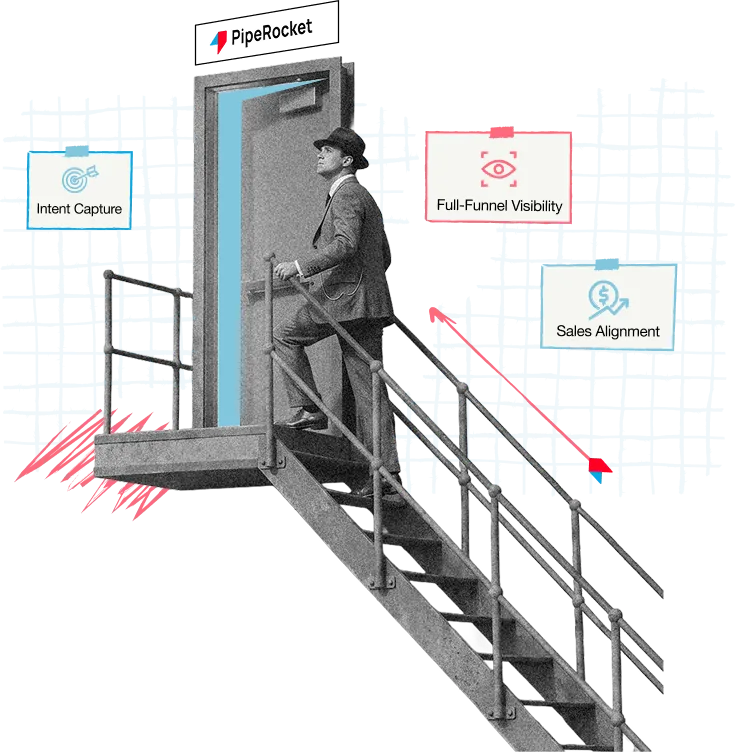
Vintage figure representing marketing ops pipeline clarity
Leading SaaS companies that choose us

Four signals your marketing ops is the bottleneck

If two or more of these sound familiar, you do not have a campaign problem. You have a data and process problem that no amount of new ad spend will solve.

Running businessman with briefcase, turning broken ops into revenue clarity

Sales rejects 30–50% of your MQLs

The MQL definition was set when your motion was different and nobody recalibrated it. Lead scoring rewards page views and email opens, not behaviours that correlate with closed-won. Reps see the leaderboard fill with bad-fit accounts and stop trusting the queue.

Last-click attribution makes paid search look magic

You spend on ABM, podcast, content, and events but your dashboard credits Google Ads for every closed deal. Multi-touch attribution was promised at kickoff and never shipped. Budget conversations get framed around the wrong channel because the numbers are wrong.

Your CRM has duplicate accounts and stale lifecycle stages

Three contacts at the same company in three different lifecycle stages. Lead source blank on 40% of records. Lifecycle stage stuck at MQL six months after close. Reports run against this data come back wrong every time.

Monthly reporting takes three days and still produces wrong numbers

Someone exports HubSpot, exports Salesforce, exports LinkedIn Campaign Manager, opens a spreadsheet, reconciles by hand. The numbers shift depending on who pulled them. The CMO presents a deck the CFO does not believe. Nobody acts on the report.

Working With PipeRocket

Why B2B SaaS teams choose PipeRocket as their marketing operations agency

Every layer is documented, owned by your team, and tied to revenue outcomes, not campaign deliverables.

In house
Other agencies
One marketer running HubSpot, Salesforce, GA4, and a spreadsheet that nobody documented when they joined.
"Out of scope." Your data is whatever it was when their campaign launched. Reporting drift is your problem.

30-day audit ships an architecture diagram, prioritised gap list, and 90-day roadmap.

Lifecycle, attribution, and routing rebuilt at the schema level. Documentation your in-house team owns afterward.

MQL is "score over 50 in HubSpot" because that was the default. Sales rejects half of them.
Lead scoring is left untouched. Their job is delivering MQLs, not making the MQL definition correct.

Lead scoring rebuilt against closed-won data.

The behaviours that historically converted become the score. Sales stops complaining about lead quality because the leads are actually qualified.

Last-click attribution because it is what HubSpot ships out of the box. ABM and podcast spend look like waste.
Multi-touch attribution promised in the deck, last-click in production. Dashboards do not match the CRM.

Attribution model fits your motion. PLG, sales-led, account-based, or hybrid.

First-touch, multi-touch, and W-shaped views run side by side. Every channel gets the credit the data supports.

Lead routing is a Zapier hack from 2022. Round-robin sometimes, territory sometimes, by mood the rest.
Routing was set up at kickoff and never revisited. SLA breaches are nobody's job.

Routing maps to your sales territories, ICP segmentation, account ownership, and SLA escalation.

Reps get accounts ready for a conversation, in the time the lead score promises.

Monthly reporting is one person manually pulling exports for three days. Numbers shift each refresh.
Looker dashboard built once. Numbers do not reconcile to the CRM. CFO uses different numbers in the board deck.

Pipeline contribution, CAC payback, channel ROI, and forecast all reconciled to closed-won deals.

Same numbers in marketing review and finance review. Board prep takes 10 minutes.

Marketing operations numbers that moved for 50+ B2B SaaS teams

Customers
CUSTOMERS
Pipeline
PIPELINE
Revenue
REVENUE

AI agents run your marketing operations data.
Senior strategists own the model.

Most marketing-ops agencies hand you a 200-row Excel and call it attribution. We built our delivery around AI agents that ingest CRM, ad-platform, product-analytics, and enrichment data, and stitch them into one pipeline source of truth that a CFO can defend.

AI in marketing operations
Data hygiene at scale +
AI surfaces duplicate accounts, stale lifecycle stages, and missing field values across HubSpot and Salesforce in minutes, work that used to take a contractor a week. We use it for the cleanup; the schema rules and field-ownership decisions stay with humans.
Attribution model selection +
AI tests first-touch, last-touch, linear, time-decay, U-shaped, and W-shaped attribution models against your closed-won deals. We pick the model the data actually supports for your motion, not the one that sounds most defensible in a board meeting.
Lead-scoring calibration +
AI calibrates behavioural and firmographic scoring against closed-won deals, not page views. The MQL threshold becomes a real predictive signal. We rerun the model quarterly so it does not drift as your ICP shifts.
Forecast confidence +
AI projects pipeline contribution, CAC payback, and revenue against your actual close rates, with confidence intervals, not single numbers. Your finance team can defend the marketing forecast in the boardroom because the model shows its work.
Drift detection +
AI watches your reporting layer for the silent failures, lifecycle stages stalling, conversion rates dropping, attribution shares shifting overnight. We catch the regression before quarter-end, not after the board deck is wrong.

We helped 50+ SaaS teams measure what marketing actually does

I've worked with a lot of paid ads contractors, agencies big and small, and this is one of the few times I can confidently say my paid ads channel—when I spend a dollar, $9 in pipeline will come in. Even now with Goldcast being acquired, I consider them my paid ads headcount.

Cindy
Cindy
Director of Growth Marketing

PipeRocket rebuilt our attribution and lifecycle logic in 90 days. Sales finally trusts the leads we send. Pipeline visibility moved from a quarter-end exercise to a daily report.

Naveen
Naveen
Head of Marketing

Before PipeRocket, monthly reporting took three days. Now it is a single dashboard the CFO and CMO both look at, and the numbers reconcile to the CRM. Marketing finally has a seat at the revenue conversation.

Nalin
Nalin
CEO

They worked closer to our in-house team than most full-time hires. Documented every automation, every field, every routing rule. We came out of the engagement with a system our team owns, not a black box we have to re-hire to maintain.

Anusha
Anusha
Founding member

PipeRocket Digital has grown our organic traffic 5X over eight months and their organic leads by 25% over six months. The team is prompt and involved strategically and in execution. Moreover, their in-depth understanding of SEO and consistent involvement make them a reliable partner.

Nivas
Nivas
Head of Marketing

PipeRocket Digital helped us achieve 2.2 times more organic search traffic growth and a 50% improvement in ROAS. The team worked as an extended team and delivered tasks promptly. PipeRocket Digital was committed to driving growth and continuously learning and improving.

Saptharishi Baradhan
Saptharishi
Head of Demand Generation

We rebuilt marketing operations around autonomous agents.

AI agents own the data layer, data stitching, attribution modelling, lead routing, lifecycle hygiene, reporting. Senior strategists own the model and the calls a CFO will defend.

Pillar 01

Autonomous, not auto-suggested

Our agents complete entire MarOps workflows end to end: data stitching, attribution modelling, routing logic, lifecycle hygiene, reporting. Not a suggestion next to an ops manager's ticket queue. Autonomous agents that finish the task and hand it to a strategist for the call.

Pillar 02

Continuous, not quarterly clean-up

Agents monitor your CRM and MAP for broken syncs, duplicate records, routing failures, and attribution gaps in real time, so data integrity holds every day, not just before the board meeting.

Pillar 03

The model stays human

Agents handle the execution layer: stitching, deduping, enrichment, report generation. Senior strategists own the calls that matter: which attribution model reflects reality, how lifecycle stages are defined, what the sales team will actually trust. The model is never delegated to a tool.

Pillar 04

One number a CFO can defend

Every agent reports to one outcome: pipeline a CFO can defend. Vanity dashboards are diagnostic, never the goal. CAC, payback, attribution by channel, and pipeline contribution surface continuously from one source of truth, not five conflicting dashboards.

What a 90-day MarOps rebuild actually looks like

No deck-only deliverables. Every phase ships an artifact your team owns, architecture diagrams, runbooks, configured fields, working dashboards.

Week 1–4 — Audit & Architecture

Read-only access to MAP, CRM, GA4, and channel platforms. We map every automation, field, integration, and lifecycle stage.

Output: architecture diagram, broken-automation list, prioritised fix list, 90-day roadmap. You decide what we do next.

Week 5–6 — Lifecycle & Lead Scoring

Pull two years of closed-won deals. Reverse-engineer the behaviours that predicted close. Rebuild MQL/SQL definitions and lead scoring against that data.

Document the model in a runbook so the next person can recalibrate it.

Week 7–8 — Data Hygiene

Dedupe contacts and accounts. Standardise lead source, deal source, and channel taxonomy across HubSpot and Salesforce. Backfill missing company associations.

Set ownership rules so the data stays clean after we leave.

Week 9–10 — Attribution Model

UTM standardisation, first-touch / multi-touch / account-based attribution wired to your motion. Channel taxonomy reconciled.

Every campaign that ships from week 10 forward reports against pipeline contribution automatically.

Week 11–12 — Routing & Reporting

Routing rules mapped to sales territories, ICP segments, and account ownership. SLA escalation paths defined. Slack alerts for breaches.

Pipeline contribution, CAC payback, and channel ROI reconciled to closed-won. One dashboard. Same numbers your CFO uses.

Handover & Optional Retainer

Every automation, field, routing rule, and dashboard documented. Runbooks for the common failure modes, lifecycle drift, attribution skew, sync lag.

Monthly retainer available for drift watch, pipeline reviews, and new automations as your motion evolves.

Success Stories

Storylane

Driving 2.5X growth and 82% more demos by rebuilding lifecycle stages and attribution in 90 days.

Read full story
DevRev

Achieving 127% Organic Traffic Growth in 6 Months: DevRev's Case Study with PipeRocket.

Read full story
Spendflo

From a broken HubSpot/Salesforce sync to 81% pipeline visibility, one source of truth across marketing and sales.

Read full story

Inside the five-agent marketing-ops stack we deploy on every account

Each agent owns one layer of the MarOps workflow, data stitching, attribution, routing, lifecycle, reporting. They run continuously and report straight to the senior strategist on your account.

Data Stitching Agent

Unifies CRM, ad-platform, product-analytics, and enrichment data into one pipeline source of truth, reconciling identities and de-duping records so every downstream number agrees.

Attribution Modelling Agent

Builds and maintains multi-touch attribution that reflects how deals actually close, so marketing spend maps to pipeline and revenue, not last-click guesses.

Lead Routing Agent

Scores, enriches, and routes inbound to the right rep with the right context in seconds, so no MQL sits in a queue and sales trusts what lands in their pipeline.

Lifecycle & Hygiene Agent

Watches lifecycle stages, dedupes records, flags broken syncs and stalled deals, and keeps the CRM clean continuously, not in a quarterly fire drill.

Pipeline Reporting Agent

Generates the CFO-grade reporting your board wants, CAC, payback, attribution by channel, pipeline by source, continuously from one source of truth, not stitched together the night before.

Marketing operations questions from finance, marketing, and RevOps teams

What does the tracking layer actually include? +
Server-side GTM or a tag manager you already run, consent-mode handling for GDPR, enhanced conversions, click-ID capture (GCLID, MSCLKID, LinkedIn), hidden-field mapping on every form, offline conversion import back to Google and LinkedIn, GA4 event architecture, warehouse sync where volume justifies it, and a Looker Studio layer on top. Documented, handed over, and yours.
What does a marketing operations agency do? +
Three lanes, in the order they usually need fixing. CRM and marketing automation: configuring HubSpot, Marketo or Salesforce so leads are tracked accurately, lifecycle stages, field hygiene, dedupe rules, sync conflicts, and a data model that doesn't lie. Attribution and analytics: connecting ad clicks from Google, LinkedIn and Meta through to CRM closed-won revenue, instead of reporting form fills. First-touch, last-touch and multi-touch models side by side, so nobody has to argue about which one is true. Lifecycle and data governance: email deliverability, lead routing and SLAs, lead scoring, UTM tracking standards, and database health. What you get out of it: one number for cost per SQL, one for CAC payback, and a pipeline report marketing and sales both sign off on.
How much does a SaaS marketing operations agency cost? +
MarOps engagements in this market span roughly $5,000–$15,000/mo for ongoing work, $20,000–$30,000/mo at the enterprise end, and about $15,000 for a fixed-scope 90-day build. First trustworthy attribution report typically lands in weeks 6–8. PipeRocket retainers start at $3,000/mo, scope-based, with a 3-month minimum then rolling, no setup fee, no markup on ad spend, and a free audit before you commit. What that buys: audit, CRM and data-model rebuild, tracking layer, attribution modelling, lifecycle and routing, dashboards and handover documentation. What it does not include: a percentage cut of your ad spend, or a 12-month lock-in.
Is this a project or a retainer? +
Most MarOps work is a project with a tail. We scope a 90-day rebuild, audit, data model, tracking layer, attribution, lifecycle and handover documentation, then either hand it back to your team or stay on a lighter retainer to run it. Competitors price the equivalent 90-day fixed-scope build around $15,000, with fractional retainers from $5,000/mo. Ours starts at $3,000/mo, scope-based, 3-month minimum then rolling, no setup fee.
Who will actually work on our account? +
Every account is run by a senior-led pod, strategist, SEO lead, paid media lead, content strategist, with no junior handoff. 30+ team, 70+ B2B SaaS clients since 2023, 4.7/5 across 18 verified Clutch reviews, Google Partner and Meta Business Partner. Named clients include Storylane, Spendflo, HyperVerge, HyperStart, DevRev and CyberSierra. Verified results: HyperStart moved SQOs from 4 to 11 and cut cost per lead 73%; HyperVerge hit 51 MQLs in three months at 3.5x on zero extra budget; Storylane grew 2.5x in a quarter with SQLs up 25%.
How long does a MarOps rebuild take? +
A scoped rebuild runs about 90 days: audit and data model in weeks 1 to 3, tracking layer and CRM configuration in weeks 4 to 8, attribution and dashboards in weeks 8 to 12, with handover documentation throughout. The first trustworthy attribution report usually lands in weeks 6 to 8.
Do we keep the tracking setup if we leave? +
Yes. Everything is built in accounts you own, documented, and handed over. That includes the tag manager container, GA4 configuration, CRM fields and lifecycle model, dashboards and the naming standards. There is no proprietary layer you have to keep paying us for.
How is a marketing ops agency different from a demand-gen agency or a RevOps consultant? +
A demand-gen agency runs campaigns. A RevOps consultant aligns sales and marketing strategy at the leadership level. A marketing ops agency rebuilds the technology, data, processes, and reporting that sit underneath both. Without us, the campaigns ship into a broken funnel and the strategy lives in a deck nobody implements.
We just migrated from HubSpot to Salesforce (or vice versa) and everything is broken. Is this what you fix? +
Yes. Migration aftermath is one of our most common engagements. The pattern is consistent: lifecycle stages mapped wrong, automations referencing fields that no longer exist, attribution data half-imported, lead routing breaking nightly. The audit phase catches all of this within the first two weeks.
Our existing MarOps person left. Can you cover until we hire a replacement? +
We can. The audit phase becomes more urgent because departing operators tend to leave undocumented systems behind. We document everything, keep the lights on through the search, and either hand over to your new hire or stay on as a retainer alongside them.
How do we know the rebuild actually worked? +
Three measurable outcomes by month four: MQL acceptance rate up at least 25%, monthly board reporting compiled in under an hour, channel-level pipeline contribution reconciled to closed-won within 5%. We baseline these in week one and report against them every month. If two of three do not hit by day 120, the retainer fee is waived.


The campaigns are not the problem. Let us prove it in 30 days.

We work with a small number of B2B SaaS companies at a time, running marketing ops as one of three services inside our SaaS marketing agency practice. If your pipeline visibility is broken, let's find out if we're the right fit.

Book Free Audit