AI-First Enterprise SEO Agency for B2B

Tired of hearing
'Give it Six months?'
You're in the right place.

Most enterprise SEO programmes drown in stakeholders, sprawling sites, and ranking reports nobody acts on. PipeRocket starts with your buyers, goes after in-market searches from week one, and connects every page across every business unit to one outcome: qualified pipeline, not a traffic dashboard.

5.0 out of 5 stars
Book free consultation
Vintage figure under an SEO Results street clock
Leading SaaS companies that choose us

How we turn search intent into pipeline

Buyers over keywords

Most enterprise SEO starts with a keyword tool and a backlog of business-unit requests. We start with your buyers — who they are, how they search when they are actually evaluating solutions, and what gets them into a procurement conversation. The keyword list comes out of that, not the other way around.

Intent over volume

Before we build broad topic coverage across regions and product lines, we go after the searches that happen when someone is already close to a decision. Comparison pages, alternative pages, high-intent category keywords. The volume is lower but these are the pages that produce qualified pipeline in weeks, not quarters.

Purpose over publish

Comparison pages, alternative pages, category keywords — the searches buyers make when they're close to a decision. We go after these first, even on a sprawling site with thousands of URLs. They have lower volume but higher conversion. That's where early pipeline comes from while the broader programme builds.

Revenue over rankings

Most agencies write the content and figure out conversion later. We build the CTA logic, the next step, and the pipeline path into the brief before a word is written. Because a page that ranks but does not convert is just an expensive line in a board deck.

Working With PipeRocket

Why enterprise teams choose PipeRocket for SEO

Every agency promises rankings. The gap is what happens between ranking and revenue — and whether your SEO partner can hold that line across business units, regions, and approval chains.

In house
Other agencies
Strategy starts with a backlog of requests from every business unit and keyword tools. What can each team publish this quarter?
Strategy starts with a keyword list built from volume and difficulty scores. High numbers, low buying intent, no view of the wider org.
Strategy starts with your ICP and a full category mindmap built before any keyword tool opens. Categories, sub-categories, and buying triggers mapped across business units and regions first. Keywords come after.
Quarters of publishing and stakeholder sign-off before anything moves in the funnel. If it ever does.
"Give it six months." Results are always one more quarter away, and procurement is still waiting on a business case.
BOFU content and high-intent categories go live first, even on a large site. Early pipeline while the broader programme builds underneath. No warm-up period.
Traffic is up. Shared in the all-hands. Nobody connects it to revenue or to a specific business unit.
Rankings improved. Sessions increased. Nobody asks about pipeline contribution or which region it came from.
MQLs, SQLs, and pipeline influenced — tracked by page type, intent category, region, and business unit. The same numbers your board and CFO ask about.
Conversion is handled after content is live. A CTA dropped in at the end, if legal signs off.
Conversion is rarely in scope. The agency writes the content. Someone else figures out how to convert it across regions.
Conversion is built into the brief before a word is written. Every page has a role, a next step, and a clear pipeline path from day one — governed consistently across the whole site.
Content is written from internal knowledge and competitor blogs. No structured view of how buyers outside the building think, and no de-duplication across teams.
Content is written from a keyword brief. What buyers say on sales calls never reaches the writer, and business units quietly compete for the same terms.
Every brief is built from real buyer language extracted from sales call recordings. Content is written the way your buyers talk when they are evaluating solutions — governed so business units complement each other instead of cannibalising.

50+ brands have grown organic pipeline with our enterprise SEO services

I've worked with a lot of paid ads contractors, agencies big and small, and this is one of the few times I can confidently say my paid ads channel—when I spend a dollar, $9 in pipeline will come in. Even now with Goldcast being acquired, I consider them my paid ads headcount.

Cindy
Cindy
Director of Growth Marketing

PipeRocket is exactly what HyperVerge needed to start our performance marketing efforts. Their experience, actionable strategies brought in 51 high-quality MQLs in just 3 months. Specifically, the team's approach towards fine-tuning campaigns across regions not only grew our leads but also saved us costs.

Navien
Navien
Head of Marketing

Working alongside PipeRocket has been a commendable experience for Storylane. We were looking into how to boost our qualified leads. Their comprehensive analysis, strategic initiatives, end-to-end campaign structuring, landing page experimentation, and targeted remarketing delivered remarkable results for us.

Nalin
Nalin
CEO

They worked closely with us and took ownership like our in-house team. The team ran over 10 experiments to identify what was working and invalidated two new geographies for the ads. Moreover, PipeRocket Digital was responsive, open to feedback, and eager to meet the objectives.

Anusha
Anusha
Founding member

PipeRocket Digital has grown our organic traffic 5X over eight months and their organic leads by 25% over six months. The team is prompt and involved strategically and in execution. Moreover, their in-depth understanding of SEO and consistent involvement make them a reliable partner.

Nivas
Nivas
Head of Marketing

PipeRocket Digital helped us achieve 2.2 times more organic search traffic growth and a 50% improvement in ROAS. The team worked as an extended team and delivered tasks promptly. PipeRocket Digital was committed to driving growth and continuously learning and improving.

Saptharishi Baradhan
Saptharishi
Head of Demand Generation

Traffic is not the enterprise SEO success metric. Pipeline is.

Customers
CUSTOMERS
Pipeline
PIPELINE
Revenue
REVENUE

Everyone talks about AI.
We just use it where it matters.

AI in enterprise SEO
Research +
AI surfaces ICP signals, competitor activity, and audience intent data across every region and business unit before a single page is briefed. Which queries are in-market, which content angles move them, and what pipeline opportunities are hiding in a site with thousands of URLs stays with the team.
Content +
AI generates first drafts, brief variants, and outline angles across audiences, regions, and intent. Which voice fits the ICP, which framing converts, whether the prose clears brand and legal review, and whether it sounds like a real practitioner stays with the team.
Design +
AI produces UI variants and page-design hypotheses that fit your existing CMS and design system. Which layout converts, where to place the CTA, and whether the page earns trust in the first three seconds stays with the team.
Optimisation +
AI flags pages losing rankings, content gaps surfacing in AI overviews, duplication across business units, and topics where competitors compound faster. What to refresh, what to consolidate, and where to invest next stays with the team.
Analysis +
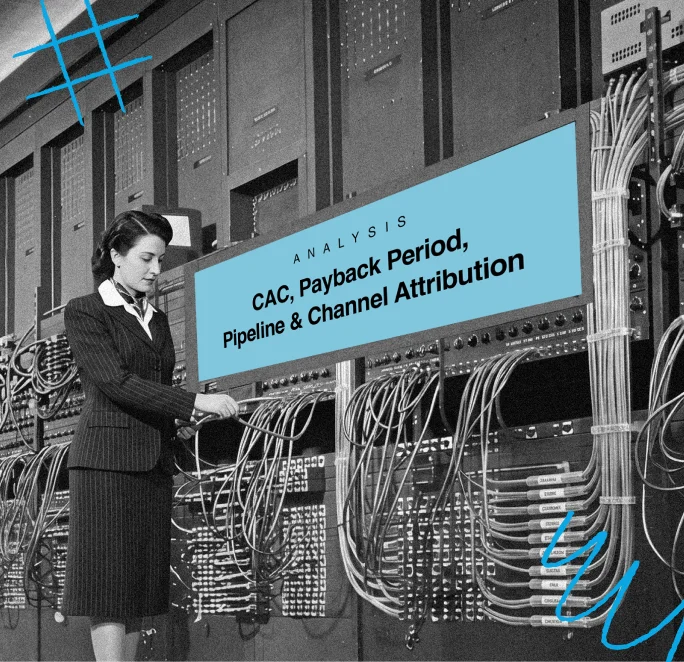
AI connects organic touchpoints to pipeline and revenue across channels, regions, and business units, surfacing CAC, payback, and pipeline contribution faster than any manual model. What it means for strategy stays with the team.

We rebuilt enterprise SEO around autonomous agents.

AI agents own the data work autonomously across a large, multi-region site — keyword research in 48 hours, briefs ready for review, audits in a sprint. Senior strategists own the calls that decide what ranks and keep governance intact.

Pillar 01

Agents that finish, not assist

Our agents complete full SEO workflows end-to-end across every business unit: keyword research, ICP mapping, content briefs, technical audits, link prospecting, refresh queues. Not chatbots. Not co-pilots. Autonomous SEO agents that finish the task without supervision and ship the artefact ready for a senior review.

Pillar 02

Crawled while you sleep

Agents crawl your site every day — even at hundreds of thousands of URLs — monitor ranking drops, watch competitor moves, and flag pages losing AI Overviews citations or ChatGPT mentions. By the time most agencies file the weekly ranking report, we have already actioned the same signals.

Pillar 03

Editorial calls stay senior

Agents produce the data layer: search demand, gap analysis, brief drafts, refresh candidates. Senior strategists make the editorial calls: which queries map to BOFU pipeline, which buyer language goes into the brief, how content is governed across teams. Strategy is never delegated to a model.

Pillar 04

Ranked, cited, and tied to pipeline

Every agent reports to one outcome: qualified pipeline. We do not optimise for impressions, sessions, or rankings in isolation. MQLs, SQLs, pipeline influenced, and CAC payback by intent category, region, and business unit surface continuously, not at month-end, so editorial decisions stay grounded in what is actually closing.

The PipeRocket Enterprise SEO Approach

We focus on outcomes, not activity. Each phase builds on the last, and we know that after the fundamentals are priced.

Start from the inside

We start by becoming part of your world, not just your marketing brief. We review sales call recordings to understand how real buyers talk, map your ICP and buying triggers, and align with every stakeholder — product, regional, and revenue — on what success actually means for pipeline.

By the end of this phase, we know more about your buyers than most people inside your building.

Map the full picture

Before opening a keyword tool, we build a category mindmap covering the full landscape of how your market searches, competes, and buys across every region and product line. Sub-categories, buying triggers, competitor gaps — all of it gets mapped before a single keyword is evaluated.

Then we assess each keyword by intent, conversion potential, and where it sits in the buying journey. The only filter that matters is pipeline potential.

Build with intent

We organise keywords into topic clusters mapped to funnel stages and owned by the right business unit, not a content calendar. Educational pages pull in early demand. Comparison and alternative pages are where that demand gets converted. Category pages anchor the pipeline.

Every page has a defined role and owner before it is briefed, so nothing ends up orphaned, duplicated, or cannibalising something else.

Go where buyers are

We go after buyers already in-market before building broad topic coverage. Comparison pages, alternative pages, high-intent category keywords — these are the searches that happen when someone is close to a decision.

The volume is lower but the conversion rate is not. This is how pipeline impact shows up in weeks while the broader programme builds underneath, even on a site with long approval chains.

Convert from day one

Every page brief includes the conversion path before a word is written. The next step, the CTA logic, the pipeline trigger — all of it is decided upfront and governed consistently across the site.

We do not publish content and then ask what happens when someone lands on it. A page that ranks but does not convert is just traffic, and that is not what we are here to produce.

Built to be found

We fix what is blocking your content from being crawled, indexed, and ranked, and build the technical foundation that keeps it that way at scale. Crawl budget, internal linking, site structure, multi-region hreflang, and Core Web Vitals are addressed in the order that moves the needle fastest.

Content and schema are structured so AI crawlers can understand, cite, and surface your pages in generated answers alongside traditional search results.

Cited where it counts

Links and brand mentions are built from industry publications, relevant ecosystems, and category-adjacent sites in parallel, not as an afterthought once rankings plateau.

We target the sources AI models pull from when forming recommendations so your brand appears in both traditional results and AI-generated answers. The goal is being seen as the credible voice in your category by search engines, AI crawlers, and the buyers who use both.

Scale what works

Performance is tracked by intent category, page type, region, and business unit, and reviewed with your sales and revenue teams, not just marketing. When a content format, topic cluster, or page type consistently converts, we build a programmatic framework around it so coverage scales across the org without rebuilding strategy from scratch.

We scale what works and treat volume for the sake of a calendar as the problem it is.

Success Stories

Storylane

Driving 2.5X Growth and 82% More Demos: Storylane's Success with PipeRocket's Campaigns.

Read full story
DevRev

Achieving 127% Organic Traffic Growth in 6 Months: DevRev's Case Study with PipeRocket.

Read full story
Spendflo

From Stagnation to Domination: PipeRocket's Impact on Spendflo's 81% Traffic Rise.

Read full story

Inside the five-agent SEO stack we deploy on every account

Each agent owns one layer of the enterprise SEO workflow — research, briefs, conversion, audits, attribution. They ship in hours instead of weeks across a large site and report straight to the senior pod on your account.

Keyword & ICP Research Agent

Scans 10,000+ search signals, competitor footprints, and ICP intent data across regions to surface in-market queries before a single page is briefed. Strategist-grade research that used to take two weeks ships in 48 hours.

Content Brief Agent

Pulls buyer language straight from your sales call recordings, mines competitor SERP gaps, and assembles draft briefs with outline, intent, and conversion path baked in. Drafts read like a real practitioner wrote them, not a template — and clear brand and legal review faster.

Page Layout & Conversion Agent

Generates UI variants and layout hypotheses for comparison pages, alternative pages, and category landers that fit your CMS and design system. Every brief includes the CTA path, the pipeline trigger, and the next step before publish.

Technical Audit & Refresh Agent

Crawls your site daily at scale, flags pages losing rankings, finds gaps surfacing in AI Overviews and ChatGPT answers, and queues refreshes before competitors notice. Full technical audit in 6 hours, not 6 weeks, even on hundreds of thousands of URLs.

Pipeline Attribution Agent

Connects every organic touchpoint to your CRM, surfacing MQLs, SQLs, pipeline influenced, and CAC payback by page type, intent category, region, and business unit. The reporting your board and CFO want, generated continuously, not assembled at month-end.

Our Tech Stack

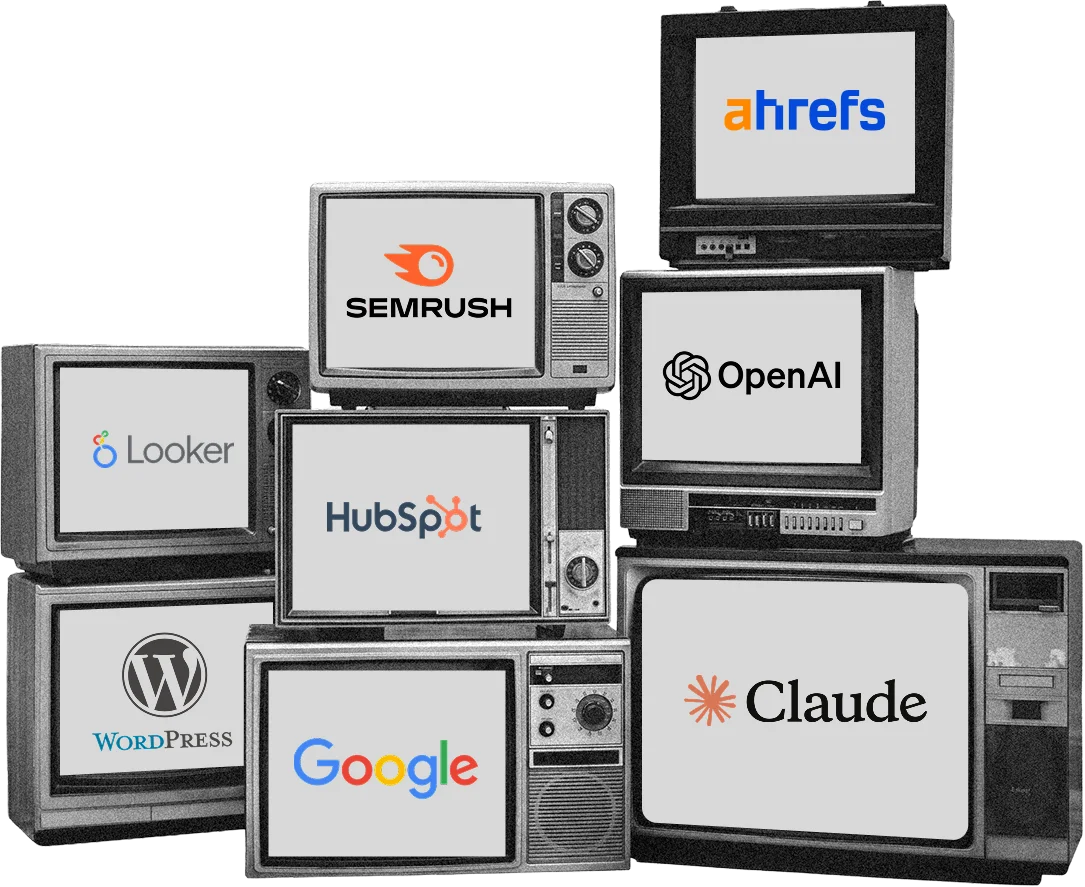
Better tools do not produce better SEO. Better judgment does. We happen to have both.

Tech stack tools

Enterprise SEO questions, answered

What is an enterprise SEO agency? +
An enterprise SEO agency specialises in growing organic search for large, complex B2B organisations — sites with thousands of pages, multiple business units, and several regions or languages. They combine technical SEO at scale with content governance and stakeholder alignment to drive qualified pipeline, not just traffic and rankings.
How is enterprise SEO different from standard SEO? +
Enterprise SEO has to work across large sites, multiple stakeholders, long approval chains, and mature martech stacks. The hard part is rarely the tactics — it is governance, crawl budget, content de-duplication across teams, multi-region structure, and reporting that survives a board or CFO review.
How do you handle SEO across multiple regions and languages? +
We map demand and intent per region, structure hreflang and site architecture so each market ranks for its own buyers, and govern content so regional teams complement each other instead of competing for the same terms. Pipeline is tracked by region so you see where organic actually contributes.
Why is SEO important for enterprise B2B? +
Enterprise B2B buying committees research independently long before talking to sales. If you're not visible in organic search across the queries each stakeholder uses, you're not in the consideration set when a multi-stakeholder, high-value deal comes up for review.
Which technical SEO factors are crucial for large B2B websites? +
Crawl budget management, indexability, hreflang and site structure across regions, schema markup for product/FAQ, internal linking that surfaces buying-stage pages, and Core Web Vitals — in roughly that order of impact on a large, complex site.


You wouldn't be here if what you were doing was working. It's time for PipeRocket.

We work with a small number of enterprise B2B organisations at a time. If your pipeline isn't growing the way your board expects, let's find out if we're the right fit.


Book free consultation