Enterprise AI SEO is the practice of getting a large, complex brand surfaced and cited inside AI search experiences, ChatGPT, Perplexity, Claude, Gemini, Copilot, and Google AI Overviews, across every business unit and region, instead of competing only for blue links. It is the umbrella for two disciplines: AEO (Answer Engine Optimization), which makes you the cited answer, and GEO (Generative Engine Optimization), which makes you visible across generative AI engines. We run AEO and GEO as one governed program tied to qualified pipeline.
AEO is the practice of getting your brand cited as the answer when buyers ask questions to AI engines like ChatGPT, Perplexity, Gemini, and Google AI Overviews, instead of optimising for a blue link on page one. At enterprise scale it combines retrieval-friendly content engineering, schema, brand-entity governance, and authoritative distribution across business units.
GEO is the broader discipline of being visible inside generative AI experiences, across ChatGPT, Perplexity, Gemini, Copilot, and AI Overviews. AEO is one tactic within GEO; GEO also covers entity recognition, brand mention frequency in training corpora, knowledge graph posture, and citation graph consistency across an enterprise.
SEO optimises for a ranked list of links. Enterprise AI SEO optimises for being the cited source inside an answer, consistently, across every business unit and region. The work overlaps (schema, authority, factual content) but the success metric shifts from "rank #1" to "cited by ChatGPT when a buyer asks the question". You need both, but most agencies still only ship one, and almost none can govern it at scale.
ChatGPT, Perplexity, Claude, Google AI Overviews, Gemini, and Microsoft Copilot. Each has a different retrieval architecture and corpus weighting, we tune the work per engine and report citation share of voice across all of them, broken out by business unit and region.
First citations on long-tail buyer questions appear within 30–60 days of restructuring content. Citation share of voice on competitive head terms takes 90–180 days, longer where governance and legal review extend the cycle. AI-led pipeline starts trickling immediately because most enterprises aren’t even tagging it yet, making it visible in the CRM is half the win.
It means AI agents handle the data layer, running buyer questions across every AI engine weekly, mapping citation share of voice by competitor and business unit, identifying which subreddits and trade publications AI engines actually pull from, and tagging AI-led referrers in your enterprise CRM. The work that didn't exist as tooling 12 months ago ships continuously. Strategic calls, which questions to target, which corpora to invest in, stay with a dedicated senior pod.
Enterprise engagements are scoped to the number of business units, regions, and languages in play, with dedicated senior pods and enterprise SLAs. Enterprise AEO/GEO bundled with
SaaS SEO runs as one program, most large B2B clients ship them together because the technical infrastructure (schema, knowledge graph, citation graphs, retrieval-friendly content) compounds across both.
Our enterprise AEO/GEO clients are large B2B organisations, often with many business units and product lines, whose buyers actively use ChatGPT, Perplexity, Gemini, and AI Overviews to evaluate vendors. We work inside security and legal review, integrate with enterprise content systems, and report AI visibility at the board level.
Yes, and the inverse is also true. AI engines retrieve heavily from indexed web content, so first-page Google rankings remain a strong predictor of citation share. Most large B2B clients run
SaaS SEO and enterprise AEO/GEO as one integrated program. Skipping SEO and going AEO-only leaves the entire retrieval substrate unbuilt.





















































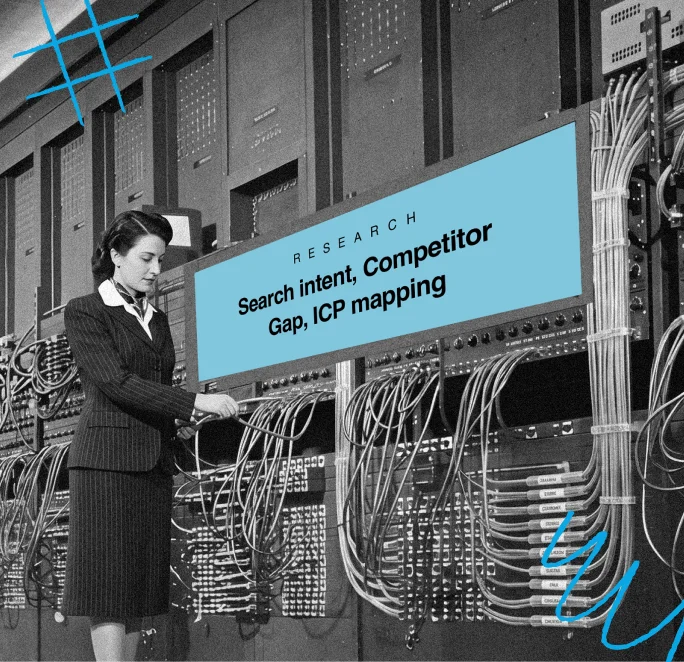
 Citation Research
 Retrieval-Ready Content
 Corpus Distribution
 Citation Monitoring
 Pipeline Attribution