


Know who buys
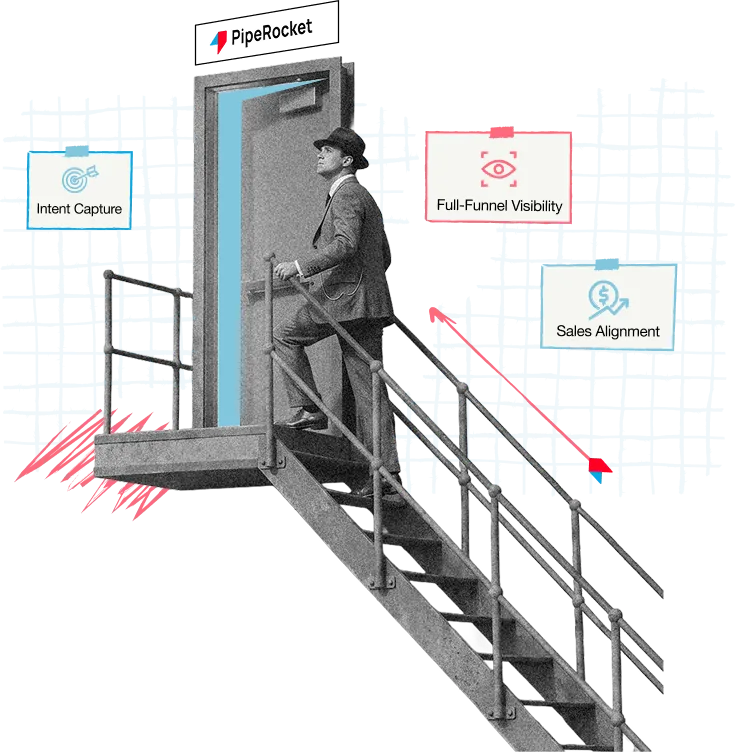
Most paid search campaigns are built around who clicks. We build around who actually buys. That means fewer leads overall but a sales team that stops rejecting what marketing sends them.
We reply within 1 business day. 70+ B2B SaaS clients · 4.7 on Clutch.
A SaaS Google Ads agency runs paid search for software companies. Unlike an ecommerce or B2C agency optimising for immediate online sales, we optimise for demo requests, free trials, CRM-attributed pipeline, and CAC payback, and we feed closed-won revenue back into bidding.























We use AI to surface patterns faster, and expert judgment to make the right decisions.

Most paid search campaigns are built around who clicks. We build around who actually buys. That means fewer leads overall but a sales team that stops rejecting what marketing sends them.
Ads are written around real buying moments and real problems, pulled from actual sales call recordings. Generic feature lists and buzzwords fill dashboards. They do not fill pipelines.
Lead quality is validated through actual sales conversations and acceptance rates, not platform dashboards. When sales reject a lead, we want to know why and fix the upstream cause.
We put spend behind people already searching for solutions, not cold audiences that need months of nurturing before they are ready to talk to sales. Budget follows intent, not reach.
You can see exactly what is influencing the pipeline and where leads drop off, not just what happened at the click. Every touchpoint is connected to revenue so the board question has a clear answer.
Budgets follow performance. When a keyword or campaign consistently drives the pipeline we scale it. When it does not we pause it and find out why. No spend exists to show activity.
Every dollar is planned, tracked, and optimised against pipeline and ROI.

Deep understanding of your product, ICP, and category built before a campaign goes live.
AI accelerates research.
Category mapping, competitor analysis, and keyword signals that would take weeks happen in days.
Treats Google Ads as a growth lever connected to your broader marketing goals, sales motion, and pipeline targets.
Not a channel to manage in isolation.
Campaign-type and keyword prioritisation recommended based on your goals, ICP, and growth stage.
AI surfaces search intent data, audience behaviour, and competitive spend patterns that inform the recommendation.
The call on where to invest is still strategic, not algorithmic.
Clear Google Ads strategy with a 30/60/90-day action plan tied to pipeline outcomes.
AI is embedded in the planning process across market research, keyword universe, and audience analysis.
The plan arrives faster and with more data behind every decision.
Measures what the business actually cares about: CAC, payback period, and pipeline contribution.
AI connects marketing touchpoints to pipeline faster than any manual attribution model.
What the data means for next steps is a human call.




I've worked with a lot of paid ads contractors, agencies big and small, and this is one of the few times I can confidently say my paid ads channel—when I spend a dollar, $9 in pipeline will come in. Even now with Goldcast being acquired, I consider them my paid ads headcount.

PipeRocket is exactly what HyperVerge needed to start our performance marketing efforts. Their experience, actionable strategies brought in 51 high-quality MQLs in just 3 months. Specifically, the team's approach towards fine-tuning campaigns across regions not only grew our leads but also saved us costs.


Working alongside PipeRocket has been a commendable experience for Storylane. We were looking into how to boost our qualified leads. Their comprehensive analysis, strategic initiatives, end-to-end campaign structuring, landing page experimentation, and targeted remarketing delivered remarkable results for us.


They worked closely with us and took ownership like our in-house team. The team ran over 10 experiments to identify what was working and invalidated two new geographies for the ads. Moreover, PipeRocket Digital was responsive, open to feedback, and eager to meet the objectives.


PipeRocket Digital has grown our organic traffic 5X over eight months and their organic leads by 25% over six months. The team is prompt and involved strategically and in execution. Moreover, their in-depth understanding of paid and consistent involvement make them a reliable partner.


PipeRocket Digital helped us achieve 2.2 times more organic search traffic growth and a 50% improvement in ROAS. The team worked as an extended team and delivered tasks promptly. PipeRocket Digital was committed to driving growth and continuously learning and improving.


AI agents own the data layer — keyword and audience builds in 48 hours, 30 ad variants per campaign, bid optimisation in minutes. Senior paid strategists own every campaign call.
Our agents complete entire paid search workflows end-to-end: keyword research, ad copy generation, landing-page hypotheses, bid signals, attribution. Not a "smart suggestion" button next to a media planner's checklist. Autonomous agents that finish the task and hand it to a strategist for the call.
Agents watch every Google Ads campaign, keyword, and ad group in real time. Search-term drift, bid-signal shifts, creative decay, and budget waste get flagged the moment they appear, not at the Monday standup three days after spend was already burned.
Agents handle the execution layer: keyword builds, variant generation, in-platform optimisation, attribution stitching. Senior paid strategists own the calls that move the spend: which campaigns to scale, which creative tests to back, when to kill a keyword that looks busy but does not produce pipeline.
Every agent reports to one number: pipeline-tied ROAS. CPC, CTR, and impression share are diagnostic, never the goal. CAC, payback period, and pipeline contribution by campaign surface continuously so the spend story holds up in the boardroom, not just the marketing standup.
We focus on outcomes, not activity. Each phase builds on the last, and we know that after the fundamentals are priced.
We start by understanding your product, your market, and the real problem you solve. This includes getting clarity on your ICP, buying triggers, and business goals.
We align on what success looks like, set clear sales and marketing expectations, map the full funnel, and put proper tracking in place. The goal is simple: everyone agrees on who you’re targeting, why they buy, and how results will be measured.
We map how your category buys on Google: which keywords are in-market, which competitors are bidding, and which messages already cut through the SERP.
AI accelerates the keyword and competitive research so the targeting strategy is grounded in data, not assumptions, before a campaign goes live.
With clarity in place, we turn insights into a focused plan. We validate offers and messaging, define a testing framework, forecast pipeline and budget pacing, and build a clear 30-60-90 day roadmap.
We also define the creative direction and assets needed so execution doesn’t stall later. This phase removes guesswork before a single dollar is scaled.
We launch with speed and intention. Campaigns go live across Google Search, Performance Max, and YouTube with clean structure, precise targeting, and clear goals.
Early traffic and search-term signals are closely monitored to understand intent and quality from the start. This phase is about learning fast without sacrificing discipline.
Optimization goes beyond ads and bids. We regularly review performance against benchmarks, improve targeting and messaging, assess lead quality, and connect campaign data to product usage and sales conversations.
Weekly reviews keep execution tight, while monthly reviews ensure strategy stays aligned with pipeline and revenue outcomes.
We scale only after proof. Once the system consistently produces qualified pipeline, we increase budgets, expand into new segments or regions, and deepen creative and experimentation.
Growth happens in a controlled way, without burning budget or credibility.
We match the campaign type to the buying stage and the intent, not the other way around. Every campaign is measured against pipeline, not clicks.
High-intent capture on the exact queries your buyers type when they are evaluating solutions — the workhorse for turning active demand into qualified pipeline.
Goal-based campaigns across Search, Display, YouTube, and Gmail — structured and fed with the right signals so the automation works for pipeline, not just conversions on paper.
Video demand generation that introduces your category and product to in-market accounts before they search — measured all the way to pipeline, not just views.
Visual, social-style campaigns across Google's feeds that build awareness and intent with the right audiences ahead of the high-intent search moment.
Retargeting and audience campaigns that keep your offer in front of accounts across the full consideration cycle, not just the first click.
Brand defense and competitor conquesting that protect your own demand and capture buyers comparing you against alternatives at the bottom of the funnel.
Keyword, creative, landing page, bid, attribution — each agent owns one stage of how a Google Ads dollar becomes a meeting your sales team takes. They run continuously and feed every decision to the senior paid strategist on the account.
Scans search intent signals, keyword data, and firmographic data across Google and third-party sources to surface the queries and audiences actually in-market for your product. Keyword builds that took strategists two weeks now ship in 48 hours.
Generates 30+ ad copy variants per campaign pulled from your sales call transcripts and competitor angles, ready to test in days instead of months. Each variant is matched to a specific buyer moment, not a generic feature list.
Produces creative variants and landing page hypotheses tied to each campaign so the on-page experience matches the click-through intent. The CTA, the proof points, and the MQL path are decided before traffic lands.
Monitors campaigns continuously, flags underperforming keywords, ad groups, budget inefficiencies, and bid signal shifts before they become pipeline problems. What to pause, what to scale, and when to change strategy stays with the team.
Connects every paid touchpoint to your CRM, surfacing CAC, payback period, and pipeline influenced by campaign, keyword, and creative. The reporting your board wants, generated continuously, not stitched together from platform dashboards.
Driving 2.5X Growth and 82% More Demos: Storylane's Success with PipeRocket's Campaigns.
Read full story
Achieving 127% Organic Traffic Growth in 6 Months: DevRev's Case Study with PipeRocket.
Read full story
From Stagnation to Domination: PipeRocket's Impact on Spendflo's 81% Traffic Rise.
Read full storyWe work with a small number of B2B companies at a time. If your pipeline isn't growing the way your board expects, let's find out if we're the right fit.
Book Free Audit






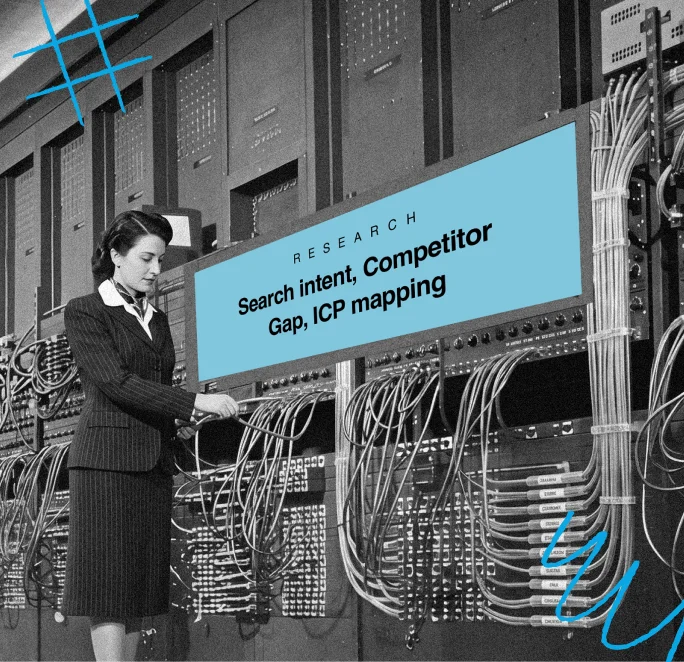
 Research
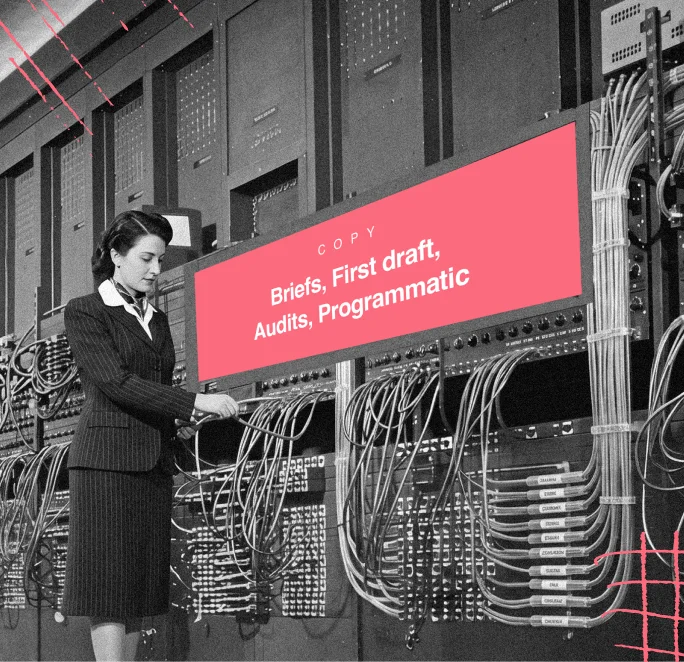
 Copy
Copy
 Design
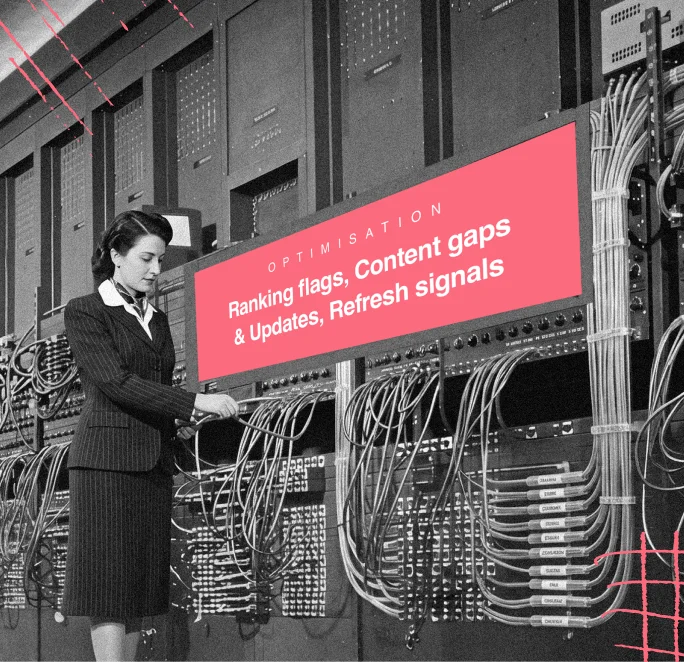
 Optimisation
 Analysis