SaaS EdTech Marketing Agency for K-12, Higher Ed & L&D

Edtech buyers don’t move on hype. They move on outcomes, security, and the budget calendar.

Choosing a SaaS EdTech marketing agency comes down to sector fit. K-12 sells into districts on procurement cycles and budget calendars, higher ed sells into committees and faculty, and corporate L&D sells into HR and enablement. We work across all three and build the programme around the sales motion you actually have.

5.0 out of 5 stars
Book Free Audit
Vintage figure under an SEO Results street clock. Edtech context
Leading SaaS companies that choose us

Why edtech SaaS marketing is different

Procurement runs on the academic calendar

K-12 districts buy in spring for fall rollout. Higher-ed has multi-year RFP cycles tied to fiscal year. Corporate L&D budgets reset annually. Programmes that ignore the calendar miss the buying window entirely.

Outcomes evidence beats features

Faculty and L&D leaders don’t buy on feature parity. They buy on retention lift, completion rates, learning outcomes, and engagement data. Marketing that pitches features loses to competitors that pitch results.

Student data privacy is non-negotiable

FERPA, COPPA, GDPR, and state-level student data laws gate every K-12 and higher-ed deal. If your privacy story isn’t front and centre, the IT review kills the pilot, even when faculty wants the product.

Faculty, IT, and procurement all sign

Faculty wants pedagogy. IT wants security. Procurement wants the lowest TCO. Sometimes the board weighs in. One landing page that pitches "educators" loses two of the three other stakeholders.

Working With PipeRocket

Why B2B edtech SaaS teams choose our edtech marketing agency

Every agency promises growth. The gap is whether they understand a buyer who has a fixed academic budget, a privacy review, and faculty politics to navigate.

In house
Other agencies
Campaigns run on a SaaS calendar. Q1 push, Q4 push. Districts and institutions are mid-cycle and ignore them.
The agency runs generic SaaS pacing. They’ve never planned a campaign around the academic year. RFP windows get missed every season.
Campaigns are timed to the academic calendar. RFP windows for K-12 and higher-ed, fiscal-year resets for corporate L&D, so the buyer sees the right message at the right week.
Marketing leads with features. Faculty rejects the deck and asks for outcomes data the team can’t produce.
The agency uses testimonial boxes and ROI calculators. Outcomes evidence, retention, completion, engagement, never gets surfaced.
Programmes lead with outcomes evidence, retention, completion, engagement, learning outcomes, every BOFU page tied to documented results.
FERPA and COPPA live in a footer link. IT review kills the pilot, even when faculty wants the product.
The agency lists "FERPA-compliant" once. No detail on student-data handling, audit trail, or vendor agreements.
FERPA, COPPA, GDPR, and state-level student-data laws surfaced first, on hero, on landing pages, in ad creative. IT self-qualifies before booking.
One landing page targets "educators". IT and procurement never see anything written for them. RFP responses go cold.
The agency uses a single ICP. They don’t map the faculty / IT / procurement / board reality.
Programmes map the full committee, faculty, IT, procurement, L&D leaders, sometimes board, with content addressing each before sales has to.

We helped Grow 50+ SaaS Brands Like Yours

I've worked with a lot of paid ads contractors, agencies big and small, and this is one of the few times I can confidently say my paid ads channel—when I spend a dollar, $9 in pipeline will come in. Even now with Goldcast being acquired, I consider them my paid ads headcount.

Cindy
Cindy
Director of Growth Marketing

PipeRocket is exactly what HyperVerge needed to start our performance marketing efforts. Their experience, actionable strategies brought in 51 high-quality MQLs in just 3 months. Specifically, the team's approach towards fine-tuning campaigns across regions not only grew our leads but also saved us costs.

Navien
Navien
Head of Marketing

Working alongside PipeRocket has been a commendable experience for Storylane. We were looking into how to boost our qualified leads. Their comprehensive analysis, strategic initiatives, end-to-end campaign structuring, landing page experimentation, and targeted remarketing delivered remarkable results for us.

Nalin
Nalin
CEO

They worked closely with us and took ownership like our in-house team. The team ran over 10 experiments to identify what was working and invalidated two new geographies for the ads. Moreover, PipeRocket Digital was responsive, open to feedback, and eager to meet the objectives.

Anusha
Anusha
Founding member

PipeRocket Digital has grown our organic traffic 5X over eight months and their organic leads by 25% over six months. The team is prompt and involved strategically and in execution. Moreover, their in-depth understanding of SEO and consistent involvement make them a reliable partner.

Nivas
Nivas
Head of Marketing

PipeRocket Digital helped us achieve 2.2 times more organic search traffic growth and a 50% improvement in ROAS. The team worked as an extended team and delivered tasks promptly. PipeRocket Digital was committed to driving growth and continuously learning and improving.

Saptharishi Baradhan
Saptharishi
Head of Demand Generation

Traffic alone is not a success metric.

Customers
CUSTOMERS
Pipeline
PIPELINE
Revenue
REVENUE

AI agents run your education buyer-cycle data.
Senior strategists run your strategy.

Most edtech agencies still run their playbook manually. We built our delivery around AI agents, district + dean buying-signal monitoring, FERPA-aware content briefs, academic-cycle campaign timing, audit refreshes, and renewal attribution, so what used to take a quarter ships every sprint, and senior strategists stay senior.

AI in edtech marketing
Research +
AI surfaces ICP signals, competitor activity, and audience intent data before a single page is briefed. Which queries are in-market, which content angles move them, and what pipeline opportunities are hiding in plain sight stays with the team.
Content +
AI generates first drafts, brief variants, and outline angles across audiences and intent. Which voice fits the ICP, which framing converts, and whether the prose sounds like a real practitioner or an agency template stays with the team.
Design +
AI produces UI variants and page-design hypotheses. Which layout converts, where to place the CTA, and whether the page earns trust in the first three seconds stays with the team.
Optimisation +
AI flags pages losing rankings, content gaps surfacing in AI overviews, and topics where competitors compound faster. What to refresh, what to consolidate, and where to invest next stays with the team.
Analysis +
AI connects organic touchpoints to pipeline and revenue across channels, surfacing CAC, payback, and pipeline contribution faster than any manual model. What it means for strategy stays with the team.

We rebuilt edtech SEO around autonomous agents.

AI agents own the data work autonomously, learner- and admin-intent research, curriculum-aware briefs, technical audits, link prospecting, attribution. Senior strategists own the calls that decide what ranks with educators, instructional leads, and procurement committees.

Pillar 01

Agents that finish, not assist

Our agents complete full edtech SEO workflows end to end: search research across teachers, admins, and learners, ICP mapping, content briefs tuned to learning outcomes, technical audits, refresh queues. Not chatbots. Autonomous agents that ship review-ready artefacts, not prompts.

Pillar 02

Crawled while you sleep

Agents crawl your site every day, watch ranking drops, competitor moves, seasonal demand around enrolment and budget cycles, and pages losing AI Overviews citations. By the time most agencies file the weekly ranking report, we have already actioned the same signals.

Pillar 03

Editorial calls stay senior

Agents produce the data layer: search demand, gap analysis, brief drafts. Senior strategists make the calls that matter in education: which pedagogy claims are credible, which evidence belongs, how to speak to both a teacher and a district buyer. Strategy is never delegated to a model.

Pillar 04

Ranked, cited, and tied to pipeline

Every agent reports to one outcome: qualified pipeline. We do not optimise for impressions or rankings in isolation. Demo requests, trials, SQLs, pipeline influenced, and CAC payback by buyer type, institution or self-serve, surface continuously, not at month-end.

Our edtech marketing services

Pick a service to dive deep, or talk to us about a programme that runs all three together.

Edtech SEO

Buyer-led content for faculty, deans, IT directors, L&D leaders, and procurement. BOFU pages built around outcomes evidence, FERPA / COPPA proof, and integration with LMS platforms. Topical authority across K-12, higher-ed, and corporate L&D, supported by keyword research and search intent mapping, use-case pages per sector, and technical SEO covering crawlability, indexation and Core Web Vitals. Editorial link building and digital PR into education trade press. Run in Ahrefs, Semrush, Screaming Frog, GSC and GA4.

Explore Edtech SEO →

Edtech PPC

Paid programmes built around named edtech buyer titles, district-level segmentation, and academic-calendar timing. Outcomes-led landing pages and CFO-defendable CACs over realistic K-12 / higher-ed cycles, using paid search plus LinkedIn ABM against administrator, faculty and IT segments.

Explore Edtech PPC →

Marketing Ops

RevOps, attribution, lifecycle, and reporting built around academic procurement realities. Sales-accepted lead rate by persona, RFP-stage progression, CAC payback by district / institution cohort, wired clean and reportable.

Explore Marketing Ops →

GEO & AEO (AI Search Optimization)

Structuring content so answer engines can lift it: question-form headings, a direct answer under each one, comparison tables, and Organization, Service and FAQPage schema backed by a consistent entity graph. We then track which prompts surface you inside ChatGPT, Perplexity, Google AI Overviews, Gemini and Claude, and report it monthly.

Edtech case studies

Storylane

Pipeline-led growth for Storylane, interactive demos, directly relevant for edtech vendors who need to show outcomes before procurement signs.

Read full story
DevRev

Achieving 127% Organic Traffic Growth in 6 Months: DevRev's Case Study with PipeRocket.

Read full story
Spendflo

61% traffic lift for Spendflo, relevant for edtech vendors managing institution-level budgets and multi-year procurement cycles.

Read full story

Inside the five-agent edtech SEO stack we deploy on every account

Each agent owns one layer of the edtech SEO workflow, research, briefs, conversion, audits, attribution. They ship in hours instead of weeks and report straight to the senior strategist on your account.

Keyword & ICP Research Agent

Scans 10,000+ search signals, competitor footprints, and edtech-buyer intent data across teachers, admins, and learners to surface in-market queries before a single page is briefed. Research that used to take two weeks ships in 48 hours.

Content Brief Agent

Pulls buyer language from sales calls, mines competitor SERP gaps, and assembles briefs with outline, intent, learning-outcome evidence, and conversion path baked in, flagging claims that need an academic source before a writer starts.

Page Layout & Conversion Agent

Generates layout hypotheses for comparison, alternative, and outcomes pages based on what converts with educators and procurement. The demo path, the trial trigger, and the next step are decided before publish.

Technical Audit & Refresh Agent

Crawls your site daily, flags pages losing rankings, finds gaps surfacing in AI Overviews and ChatGPT answers, and queues refreshes ahead of enrolment and budget cycles. Full technical audit in 6 hours, not 6 weeks.

Pipeline Attribution Agent

Connects every organic touchpoint to your CRM, surfacing demo requests, trials, SQLs, pipeline influenced, and CAC payback by page type and buyer, institution or self-serve. The reporting your board wants, generated continuously.

Our Tech Stack

Better tools do not produce better SEO. Better judgment does. We happen to have both.

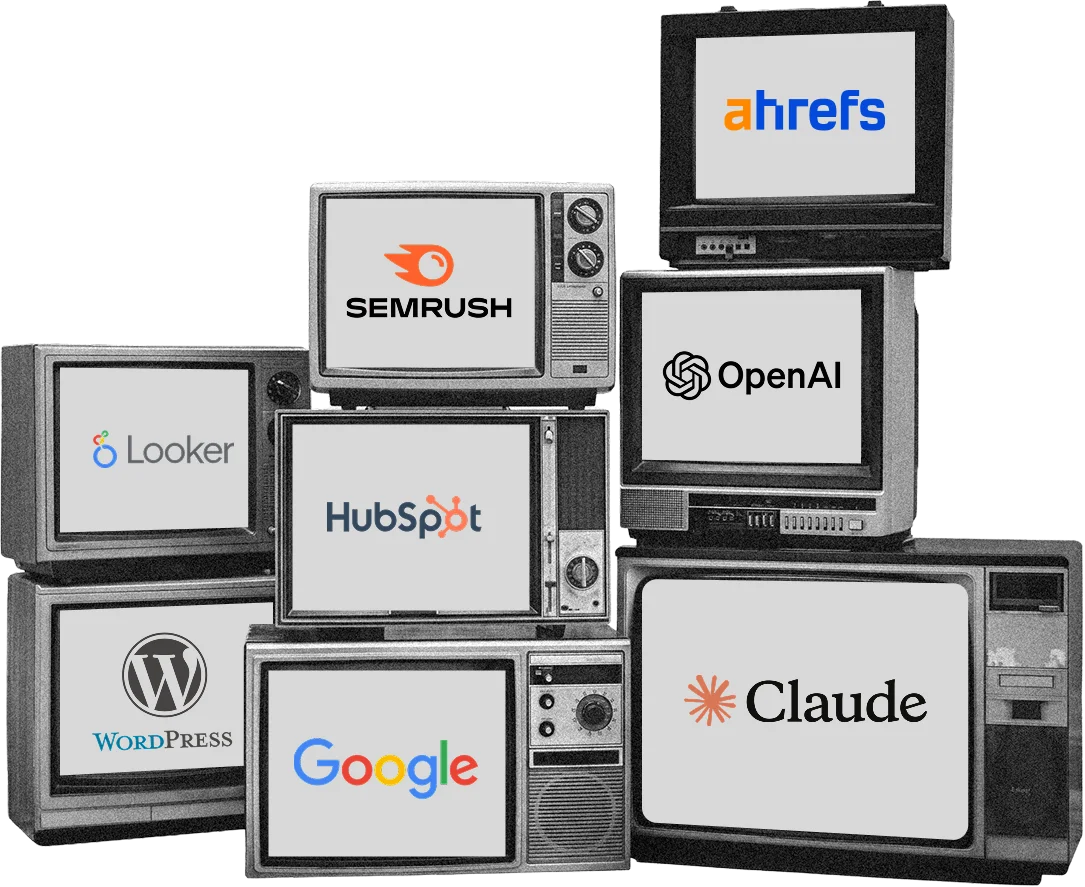
Our SaaS SEO tool stack: Ahrefs, Semrush, OpenAI, Claude, Google, Looker Studio, HubSpot and WordPress

EdTech SaaS marketing questions, answered

Do you optimise for AI search (GEO and AEO)? +
Yes. Generative Engine Optimization and Answer Engine Optimization are part of every brief. We structure content for extraction, with a direct answer under each heading, question-form headings, comparison tables, and Organization, Service and FAQPage schema backed by a consistent entity graph. Each month you get a citation report naming the prompts that surface you inside ChatGPT, Perplexity, Google AI Overviews, Gemini and Claude, and the ones a competitor owns.
What is a SaaS EdTech marketing agency? +
A SaaS EdTech marketing agency runs demand generation for education software across three distinct sectors, K-12, higher education and corporate L&D, each with its own buyer, procurement rules and budget calendar. Choosing one comes down to sector fit and sales-motion fit, not general education experience.
How much does a SaaS EdTech marketing agency cost? +
EdTech marketing retainers in this market run roughly $4,000–$15,000/mo depending on sector count and whether product marketing sits in scope. Expect pipeline reporting from week four; time campaign pushes to district and institutional budget cycles rather than to our reporting calendar. PipeRocket retainers start at $3,000/mo, scope-based, with a 3-month minimum then rolling, no setup fee, no markup on ad spend, and a free audit before you commit. What that buys: strategy, SEO, paid media, sector-specific content, attribution wiring and pipeline reporting. What it does not include: a percentage cut of your ad spend, or a 12-month lock-in.
Who will actually work on our account? +
Every account is run by a senior-led pod, strategist, SEO lead, paid media lead, content strategist, with no junior handoff. 30+ team, 70+ B2B SaaS clients since 2023, 4.7/5 across 18 verified Clutch reviews, Google Partner and Meta Business Partner. Named clients include Storylane, Spendflo, HyperVerge, HyperStart, DevRev and CyberSierra. Verified results: HyperStart moved SQOs from 4 to 11 and cut cost per lead 73%; HyperVerge hit 51 MQLs in three months at 3.5x on zero extra budget; Storylane grew 2.5x in a quarter with SQLs up 25%.
How do you measure edtech marketing beyond clicks and leads? +
We capture the click ID on every form (GCLID from Google, plus the LinkedIn click ID) and stitch it into HubSpot or Salesforce, mapped through MQL to SQL to SQO to closed-won. Offline conversion import then pushes closed-won values back to the ad platforms so bidding optimises on revenue instead of cheap leads. Underneath sit Google Tag Manager and server-side tracking, enhanced conversions, consent-mode handling, UTM parameters and naming standards, GA4 event architecture, and lead routing and deduplication. Reporting runs in Looker Studio against a data-driven attribution model, with multi-touch attribution shown alongside it. Cost per SQL, CAC payback and pipeline contribution are the headline numbers, not sessions or form fills.
How is K-12 marketing different from higher ed? +
K-12 sells into districts on procurement cycles, with a board and a fixed budget calendar, so timing and compliance paperwork matter as much as the pitch. Higher education sells into committees and faculty, where departmental autonomy means several parallel champions and a longer consensus build. Corporate L&D sells into HR and enablement and behaves closest to normal B2B SaaS.
When should EdTech campaigns run in the budget cycle? +
Ahead of it. District and institutional spending is calendar-bound, so demand has to be built in the quarter before budgets are set, not when they open. In practice that means front-loading awareness and evaluation content before the buying window and reserving bottom-of-funnel spend for when purchase orders are actually moving.
How much does EdTech marketing cost? +
EdTech marketing retainers in this market run roughly $4,000 to $15,000/mo depending on how many education sectors are in scope and whether product marketing is included. PipeRocket starts at $3,000/mo, scope-based, with a 3-month minimum then rolling and no setup fee.
Which edtech sub-verticals do you work with? +
K-12 SaaS, higher-ed platforms, corporate L&D, LMS, course authoring, assessment, tutoring, certification, online universities, and B2C learning, anywhere your buyer is faculty, an L&D leader, an IT director, or procurement, the playbook applies.
How do you sync campaigns to the academic calendar? +
We map K-12 spring RFP windows, higher-ed fiscal-year cycles, and corporate L&D budget resets, then sequence content, ads, and outreach to land in the right window. Buyers see the message when their budget is open, not when our quarter-end demands a push.
Do you handle SEO, PPC, and marketing ops together or separately? +
Both. You can engage us for a single service or for a unified programme where SEO, PPC, and pipeline ops share buyer research, attribution, and reporting. Most edtech clients run all three because the multi-quarter procurement window demands consistent presence.
How quickly do you produce qualified pipeline? +
First spend goes live in week 3. Most edtech clients see qualified pipeline within 30–90 days once attribution and outcomes-led pages are wired in. Closed-won timing depends on the academic calendar, typically 3–9 months for K-12, 6–12 for higher-ed, 60–120 days for corporate L&D.


Generic SaaS marketing won’t survive an academic RFP. Let’s build a programme that does.

We work with a small number of edtech B2B SaaS companies at a time, as a vertical inside our broader SaaS marketing agency practice. If your pipeline isn’t growing the way your board expects, let’s find out if we’re the right fit.

Book Free Audit