
12.5x Content Traffic, 337% AI-Search Growth: Atlas Systems' Early SEO Results
This case study covers the first three quarters (Jan–Sep 2025) of an ongoing engagement — a progress snapshot, not a full-year result.
The challenge
Atlas Systems sells into a specialised, high-stakes enterprise category — third-party risk management (TPRM) and provider lifecycle management (PLM) — where buyers research compliance and vendor-risk software long before they ever talk to sales.
At the start of the engagement, Atlas had almost no organic visibility to meet that research: an average keyword position in the high 30s, a handful of Top-3 rankings, and negligible presence in the emerging channel of AI-assisted search (ChatGPT, Perplexity, Gemini). The challenge wasn’t one product to rank for — it was two distinct buyer categories (TPRM and PLM) that each needed their own keyword coverage, content depth, and authority, built from close to zero at the same time.
Our approach
The strategy, in the team’s own words: “capture existing market demand in intent channels and create new demand in awareness channels.” In practice, that meant building two parallel content tracks under each product line:
- ToFU (awareness) content — educational, top-of-funnel material establishing Atlas as a source on TPRM and PLM topics broadly, not just its own product.
- BoFU (bottom-funnel) content — solution and comparison pages aimed directly at in-market buyers already evaluating vendors.
On top of that foundation:
- Publishing velocity was scaled aggressively — from dozens of pieces approved in Q1 to a 140+ page target entering Q2, backed by a live content-status tracker to keep production honest against plan.
- Technical SEO issues were fixed on an ongoing basis, clearing the structural blockers that cap how far new content can rank.
- Authority building ran in parallel — targeted high-quality referring-domain acquisition alongside the content push.
- Visibility was pursued beyond traditional search — YouTube video, programmatic SEO, free interactive tools, and community engagement (Reddit, Quora, StackOverflow) were all built into the plan to diversify how buyers could discover Atlas.
- AI-search visibility was treated as a first-class channel from day one — tracking and optimising for citation in ChatGPT and Perplexity answers starting in Q1, well ahead of most competitors treating this as a real channel.
The results
Every headline metric moved in the same direction, every quarter, with no reversals across the first three quarters:
| Metric | Q1 ‘25 | Q2 ‘25 | Q3 ‘25 |
|---|---|---|---|
| Non-branded impressions (GSC) | 1.20M | 3.38M | 5.86M |
| Non-branded clicks (GSC) | 8,450 | 9,280 | 12,200 |
| Avg. keyword position | 39.5 | 41.2 | 35.8 |
| ToFU content clicks | 455 | 1,637 | 5,685 |
| BoFU content clicks | 232 | 1,257 | 1,692 |
| Organic leads | 3 | 12 | 14 |
| MQLs | 0 | 4 | 8 |
| Top-3 keyword rankings | 76 | 109 | 180 |
| AI-search referral sessions | 219 | 732 | 956 |
| Bounce rate | 59.3% (Jan) | — | 33.9% (Sep) |
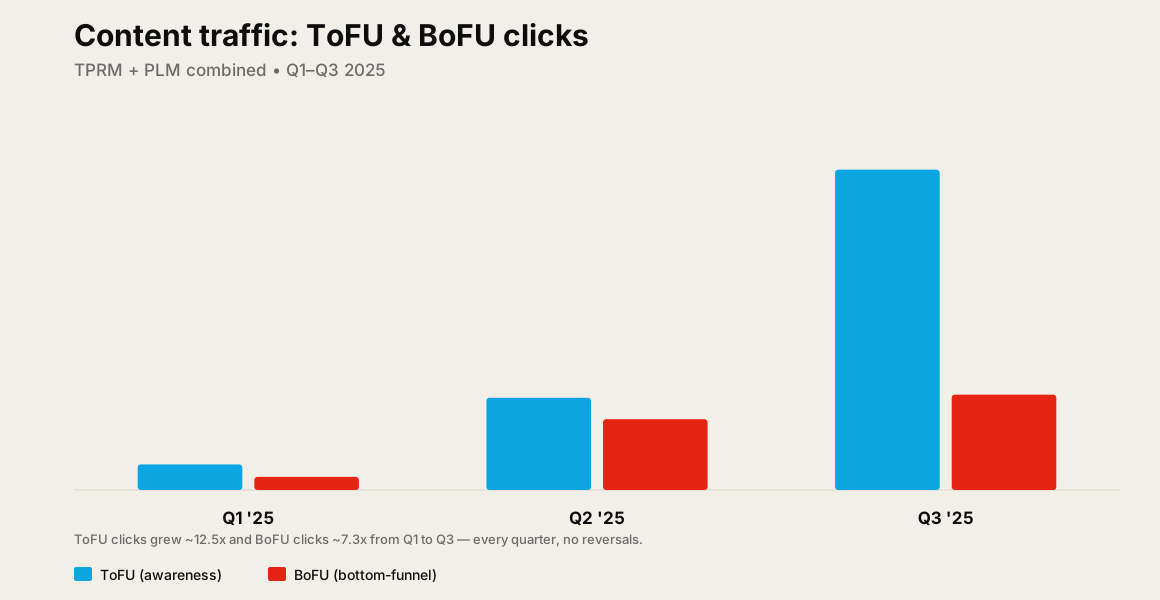
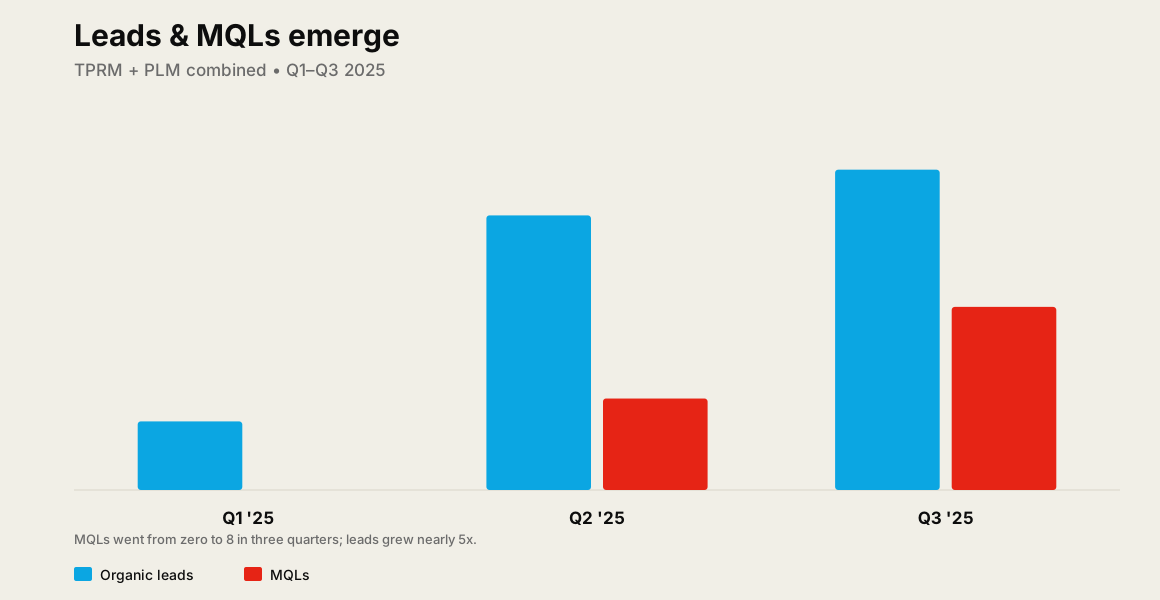
Reading the trend: content traffic scaled the fastest of any metric — ToFU clicks alone grew roughly 12.5x — while rankings and impressions climbed in step, confirming the growth was coming from genuinely new visibility, not a handful of outlier pages. AI-search referral sessions grew faster than traditional organic clicks (+337% vs. +44%), an early signal that the investment in LLM-citation visibility is paying off ahead of the broader market catching on. Bounce rate falling from 59.3% to 33.9% points to the content getting more relevant to the searches landing on it, not just more voluminous.
Why it worked
- Two categories, two tracks, one system. Building ToFU and BoFU content separately for TPRM and PLM meant neither buyer category diluted the other’s keyword signal — each built its own authority in parallel.
- Volume was paired with a tracker, not left to chance. Scaling from a Q1 backlog to a 140+ page Q2 target only works if production is actively measured against plan — which it was, every week.
- AI-search was a Day-1 channel, not an afterthought. Most organic programs are still catching up to ChatGPT and Perplexity as a source of traffic. Atlas was already tracking and building for it in Q1 — which is likely why its AI-referral growth outpaced traditional search growth.
- Diversification reduced single-channel risk. Video, programmatic SEO, free tools, and community answers gave the program more than one lever to pull as it matured.
Honest notes
- This covers Q1–Q3 2025 only — the first three quarters of an ongoing engagement, not a full-year or final result.
- Lead and MQL volumes are still small in absolute terms (single digits to low teens per quarter), so the percentage growth, while real, is off a low base.
- Avg. position and rankings reflect GSC-tracked queries as reported at the time; both continued to be actively worked on beyond Q3.
More Success Stories
Achieving 3.5X MQL Growth: HyperVerge's Success Story with PipeRocket
Read full story

+67% Inbound Leads: How QX Scaled Pipeline Across Two Regions at Once
Read full story
+166% AI Search Traffic: How Esri Compounded Organic Growth Year Over Year
Read full story

Book a call today. Scale your pipeline tomorrow
Please note that we only partner with 1-2 new clients per month
Let's talk!